
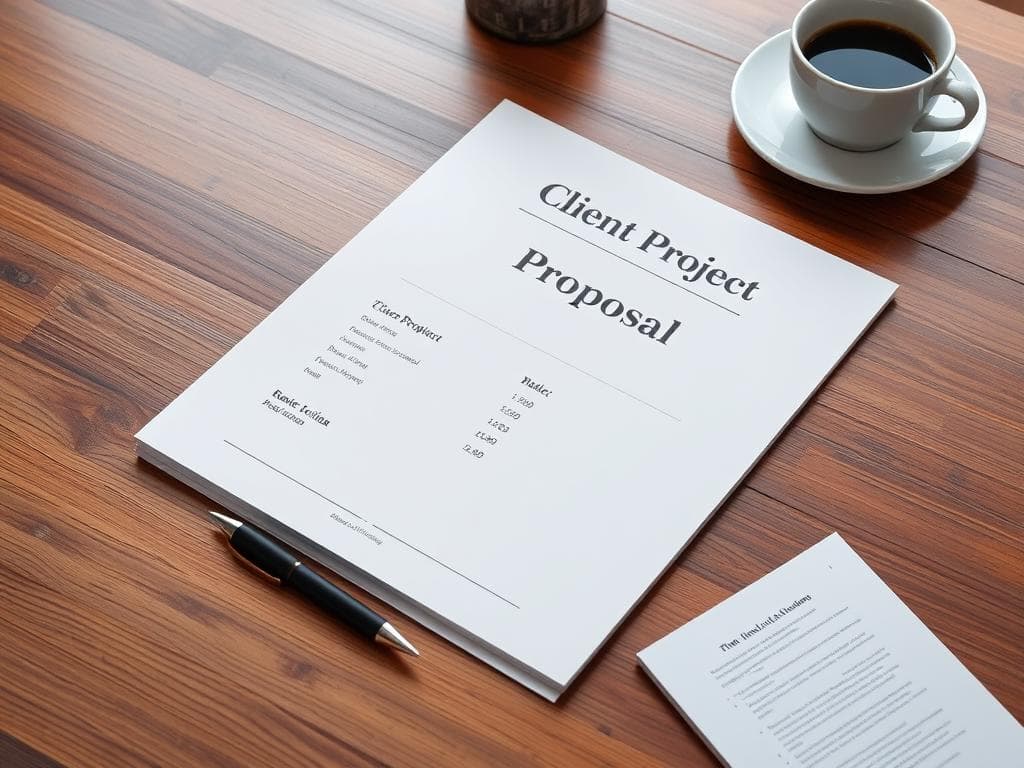
Client Project Proposal (Two-Tier Pricing)
The freelancer-proven proposal skeleton: restate the goal to build trust, a three-phase approach, and two pricing tiers to lift close rates.
prompt
Draft a client project proposal for {service} provided to {client}. Sections: 1) situation summary restating the client's goal {goal}, 2) proposed approach in three phases with deliverables, 3) timeline table, 4) investment section presenting {price} with two option tiers, 5) next steps with a single clear call to action. Professional but warm tone, under 600 words.
Variables
This prompt uses the variables below. Fill them in when you hit Copy — anything left blank keeps its {placeholder}.
- {service}Service
- e.g. 品牌官網重新設計
- {client}Client
- e.g. 本地烘焙坊
- {goal}Client goal
- e.g. 提升線上訂單
- {price}Price
- e.g. NT$120,000
Use case
Freelancers and small studios responding to client inquiries with a formal proposal.
How to use it
Fill four fields: the {service} you offer, the {client}, the {goal} they want to reach, and your {price}. Run it through Claude, ChatGPT or Gemini for a sub-600-word draft with five sections. It gives you the full skeleton — situation summary, three-phase approach, timeline, two-tier pricing and next steps. Replace the deliverables, timeline and figures with your real plan, then lay it out in Gamma or Google Docs and send.
Why it works
This skeleton is a close-rate structure proven in the freelance world. Opening by restating the client's goal rather than introducing yourself works because what clients care about most is whether you understand their problem — get them nodding first and they'll actually hear the rest. The three-phase approach turns a vague service into visible steps and lowers their sense of uncertainty. Two-tier pricing is the key piece of psychology: given two options, the client's question shifts from 'should I do this' to 'which one', which usually lifts close rates. A single clear CTA at the end keeps the proposal from vanishing into silence.
Tips & variations
- Write the goal in the client's words: quote {goal} straight from their email or meeting, so the restatement makes them feel understood.
- Design the pricing path: have the lower tier solve the core need and the higher tier add something they'll want, so people step up rather than just compare prices.
- Give milestones, not hours: label each phase with a deliverable the client recognizes (like 'first design draft') — far more persuasive than a count of hours.
- Structure first, polish second: let the AI give a clean structure on the first pass, then ask it to rewrite in your brand voice on the second — two steps yields steadier quality.
Recommended tools
Contains affiliate links: we may earn a commission when you purchase or sign up through them, at no extra cost to you.
Related prompts
 Proposals
Event Sponsorship Proposal (Audience-Data Led)
Leads with audience data before the ask — the single biggest reason sponsorship pitches get a yes. The three-package table with a 'Most Popular' anchor nudges sponsors toward the middle tier instead of the cheapest one.
 Proposals
Year-End Banquet Quotation (Itemized Per-Table)
Separating service fees and add-ons from the per-table price is what makes corporate clients trust a quote — HR organizers compare at least three venues, and transparent line items consistently win the deal.
 Proposals
Marketing Retainer Proposal (Scope-Fence)
The 'Not included — quoted separately' box is the difference between a profitable retainer and six months of free extra work. Exact deliverable quantities make the value auditable — and renewals an easy yes.
 Proposals
Brand Partnership One-Pager (Win-Win Snapshot)
The 'You bring / We bring' two-column table makes the value exchange visible at a glance — busy owners say yes to balance, not to pitches. Capped at 300 words so it actually gets read and answered.
 Proposals
Bubble Tea Office Group-Order Quote (Three-Tier Table)
The three-tier table with a 'Most Ordered' anchor uses decoy-pricing psychology to nudge offices toward the mid tier, while keeping the whole quote scannable in 30 seconds.
 Proposals
Bakery Wholesale Supply Proposal (Letter + Spec Sheet)
Leads with the cafe's margin and shelf appeal instead of the baker's pride, and the free-tasting risk reversal removes the biggest objection to switching suppliers.